Unifying TriNet's AI Experience
Designing a strategy and roadmap to consolidate fragmented AI tools into one cohesive experience across TriNet's enterprise HR platform.
The situation
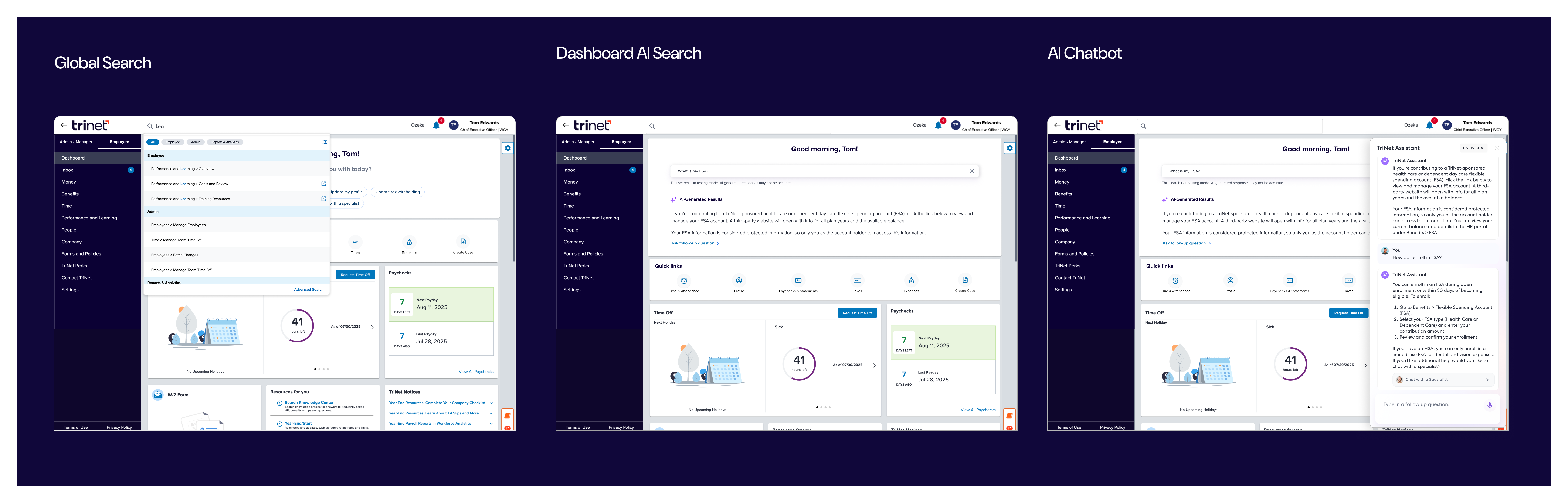
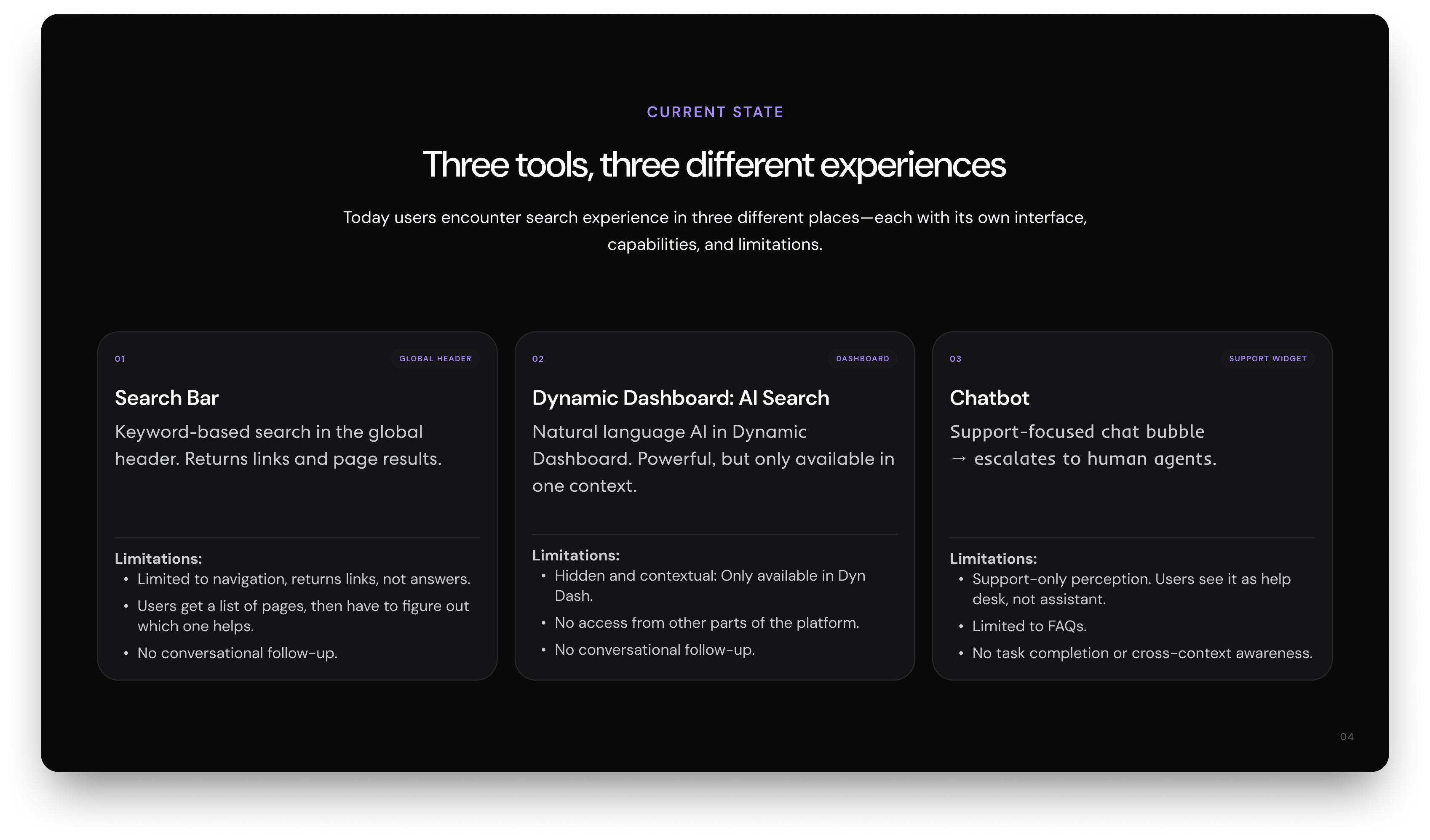
TriNet had invested in AI across its platform, but the efforts were siloed. Users encountered three separate AI-powered tools — a keyword search bar in the global header, a natural language AI search buried inside the Dynamic Dashboard, and a support chatbot — each with its own interface, capabilities, and blind spots. None of them talked to each other.
The result was predictable. Users didn't know which tool to use for what. Context was lost between interactions. The support team was fielding questions that a unified AI experience could have handled. We were investing in AI but not getting the return because the experience was fragmented.
What I did
I led a comprehensive audit of every AI touchpoint across the platform — mapping capabilities, limitations, user perceptions, and task completion patterns for each tool. This gave us a clear picture of where users were getting stuck and where the opportunities were.
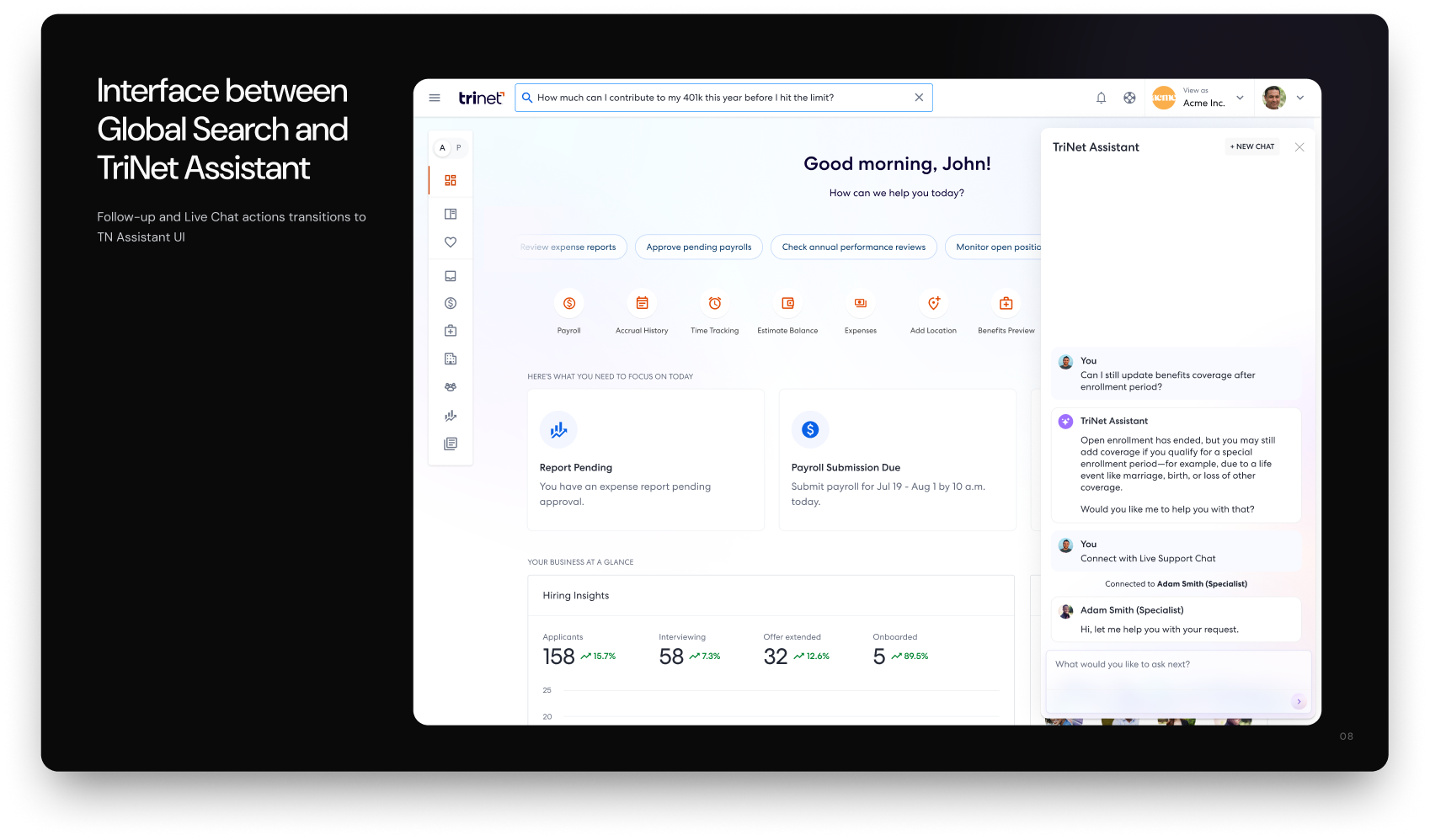
From that research, I developed a design strategy and phased roadmap to unify the experience. The core idea was simple: regardless of where a user starts — search bar, dashboard, or chat — they should be talking to the same AI, with the same context and the same quality of response. One backbone, multiple entry points.
The approach
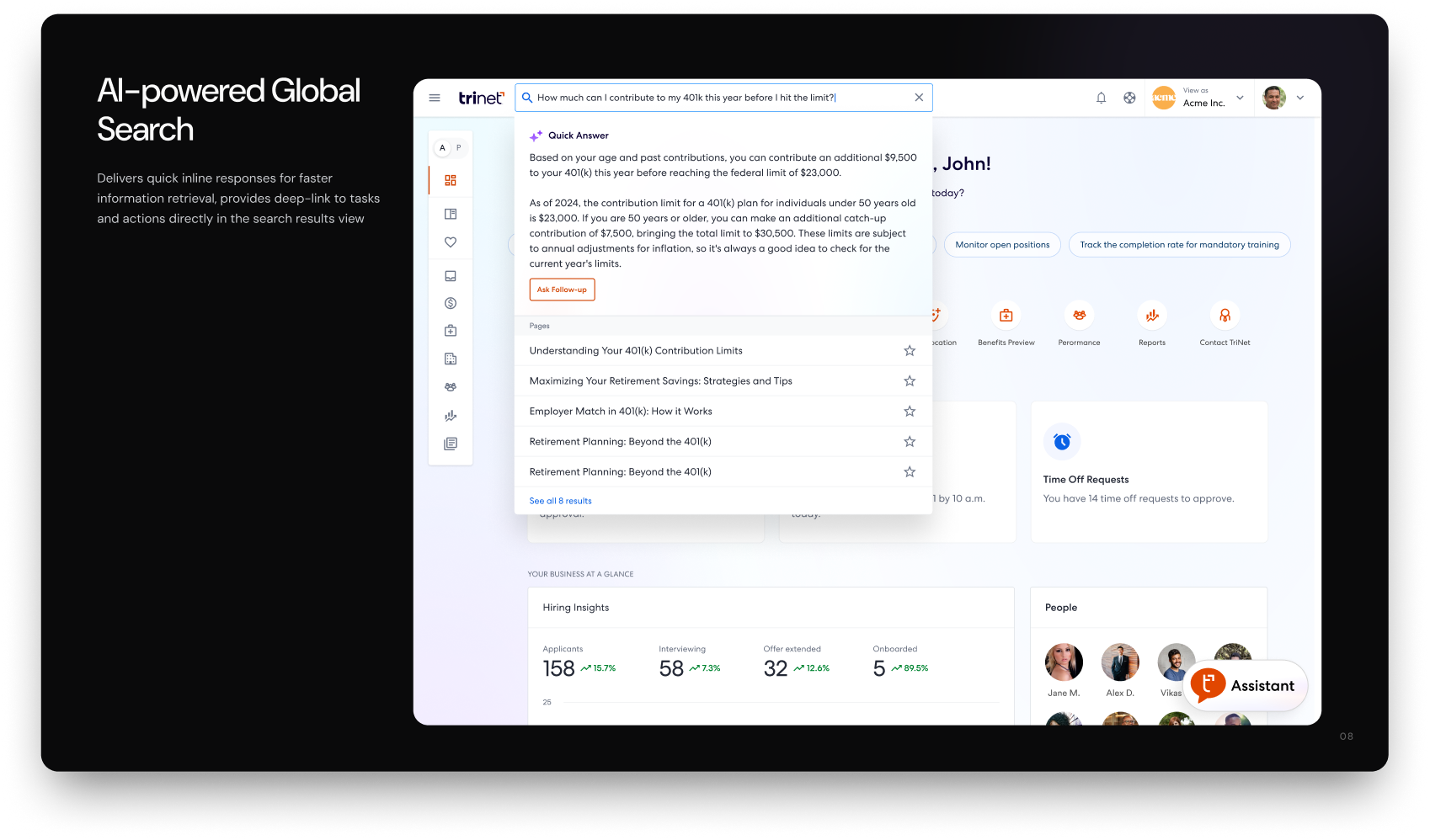
Rather than building something new from scratch, I proposed an incremental path. We'd start by upgrading the chatbot to conversational AI, then create seamless handoffs between the dashboard search and the assistant. From there, we'd transform global search into an intelligent, NLP-powered experience and phase out the redundant dashboard AI tool.
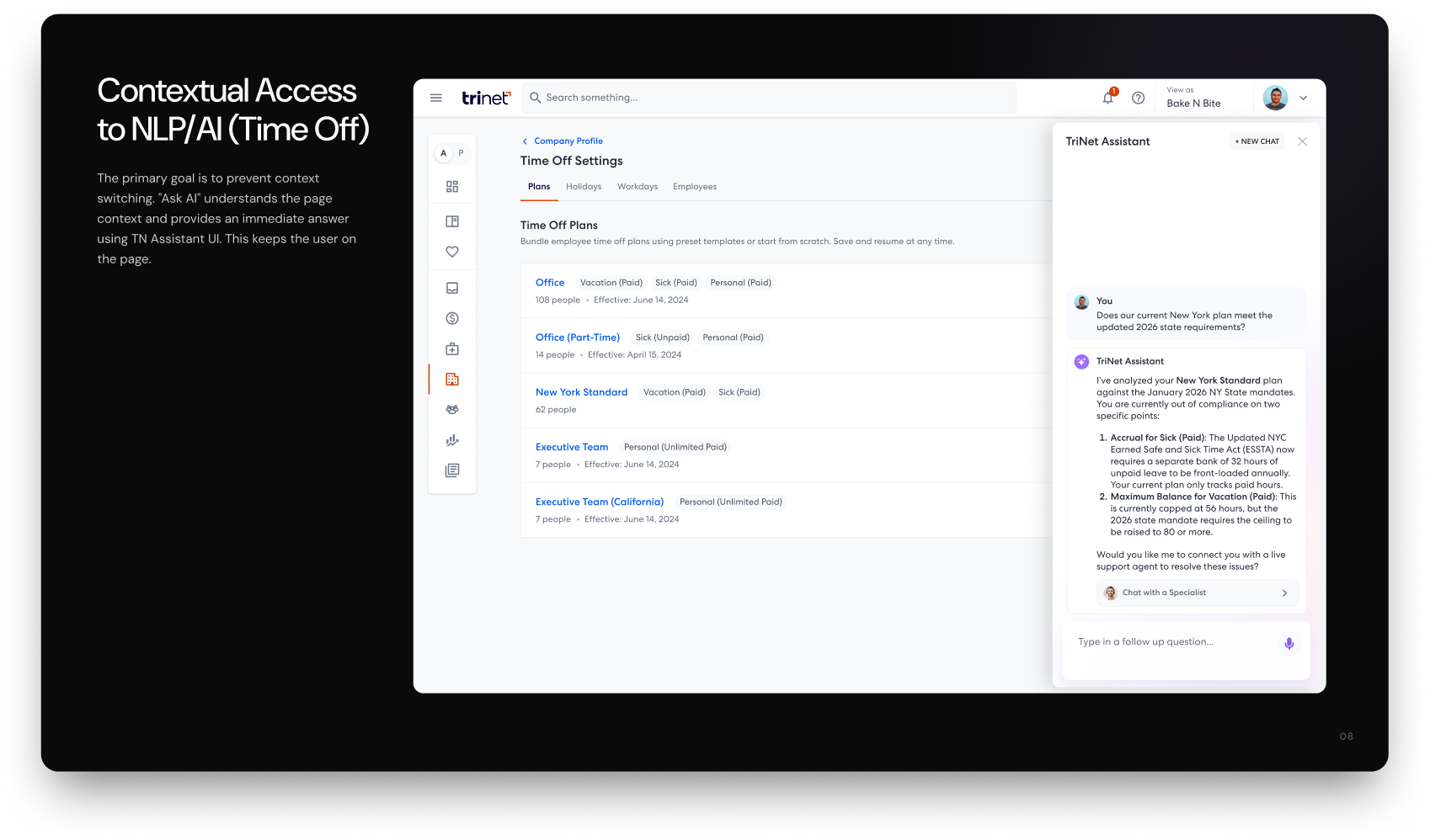
The final piece was embedding contextual "Ask AI" directly into key workflows — so users could get help without leaving what they were doing. Each phase was designed to deliver immediate value while building toward the unified vision.
What came out of it
The strategy was adopted as the AI experience roadmap for the platform. The first phase — the conversational chatbot upgrade — shipped at end of Q1, immediately reducing support escalations and improving user satisfaction with AI-assisted answers.
More importantly, the work aligned product, engineering, and design around a shared vision for AI at TriNet. Instead of three teams building three tools, we now have a single, coherent strategy that every subsequent AI investment builds on.